
Another place we’ve visited on this trip is Fulton Processors, which is a chicken processor outside of Santa Rosa. This plant processes Fulton Valley Farms chickens.
Fulton Valley Farms chickens are grown by a group of 14 different farms, which are either owned by FVF or under exclusive contract to them. The chickens are all naturally raised, with no hormones or antibiotics, and are fed corn-based diets with no animal byproducts.
We have chosen Fulton Valley Farms for our chicken because the birds are delicious and the operation seems to offer a little more transparency than other chicken processors we’ve found. We did however discover that we knew a little less than we thought about the chickens.
The chickens are actually grown in the Central Valley of California, not in Sonoma County as I had thought. Additionally, while the chickens are described as free-range, none of the 14 farms allow visitors. So it’s really difficult to get a sense of whether free-range means that the birds actually walk around a lot or merely have an door to their coop which is periodically opened. In the latter case, the range bird would be little different than a penned bird.
Fulton does assert that their chickens are raised in a humane manner, and of course in a natural way free of hormones or antibiotics, both of which I see no reason to question. And both of which are good things.
We would of course prefer to work with farmers whose operations we could visit and learn about, so we’ll keep looking for chicken purveyors that can provide that. In the meantime, when we have Fulton chickens we’ll describe them only as from California, not Sonoma County.
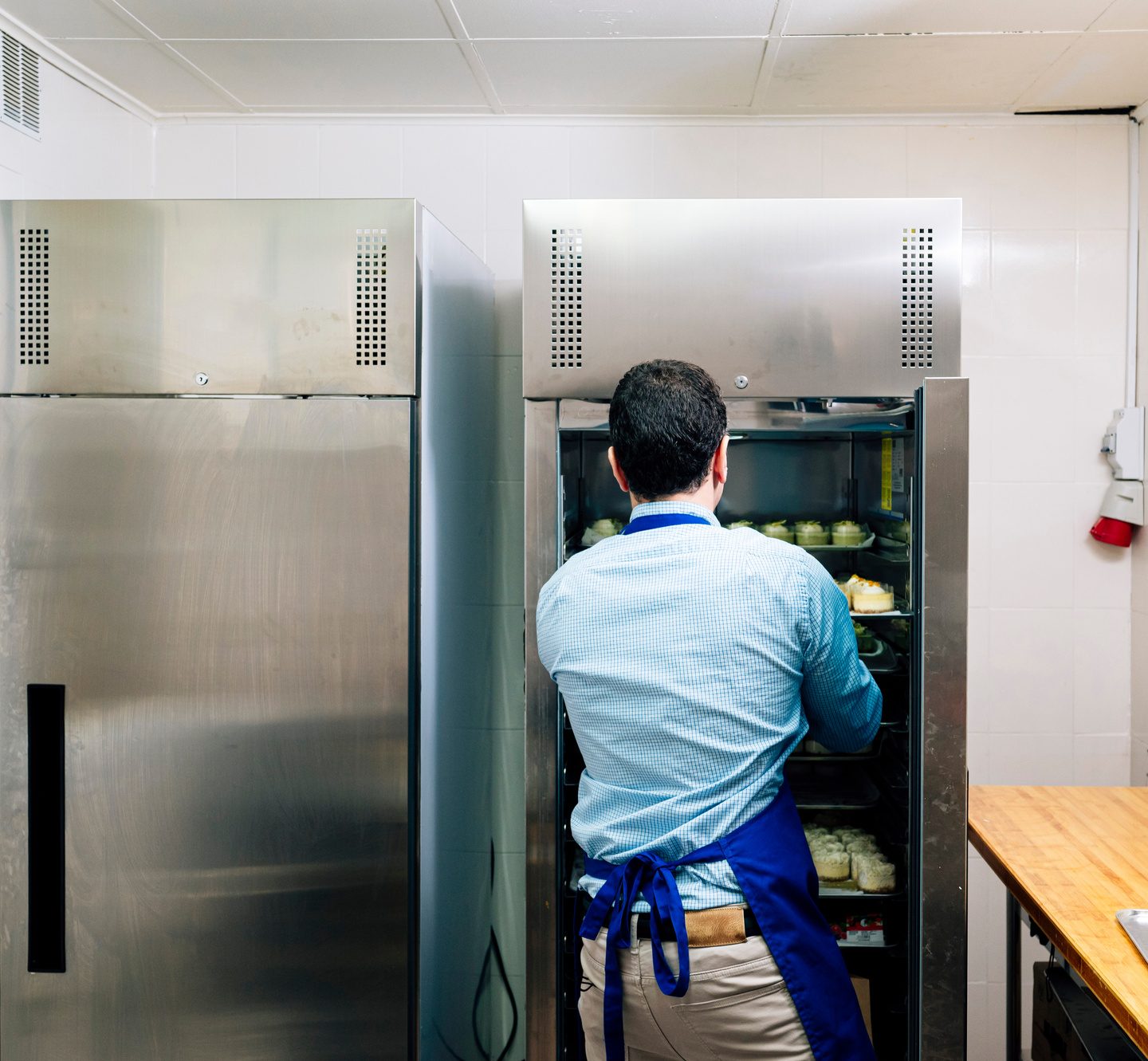
That said, the folks at Fulton Processors were very generous with their time and explanations, and it was good to see how a poultry plant works. The biggest differences we saw between the chicken plant and the other meat processors I’ve visited is that with the scale and speed of a chicken plant (this one was small and processed 80,000 birds a week), everything is faster and more automated. Almost every station was performed by a machine, usually with a human operator or backup. This was in marked contrast to the beef plant in which most stations were manned by a skilled person using just a knife or other tool.
I have not been to Fulton Valley Farms myself, but I have looked at their website. They don’t go out of their way to tell you that their chickens are actually range-fed. In fact, it says they are corn-fed (which strictly speaking, in the opinion of some, is not so great in itself, as corn in this country is grown very energy-intensively). But if you take a look at Marin Sun Farms, which is only maybe an hour or so away, they take great pains to tell you and show you how they let their chickens run around in fields all day where they forage for themselves. Seems to me that is probably a healthier life for a chicken, and therefore for anyone who might eat them.
I am not trying to condemn FVF, but I just wanted to throw this into the mix.
Erika,
I hadn’t heard about Marin Sun Farms, but I’m excited to hear about them. We’ll look into possibly getting some of their bird in, it sounds like just the kind of food we like to showcase. Thanks for commenting!
Jay